English Document:
Author













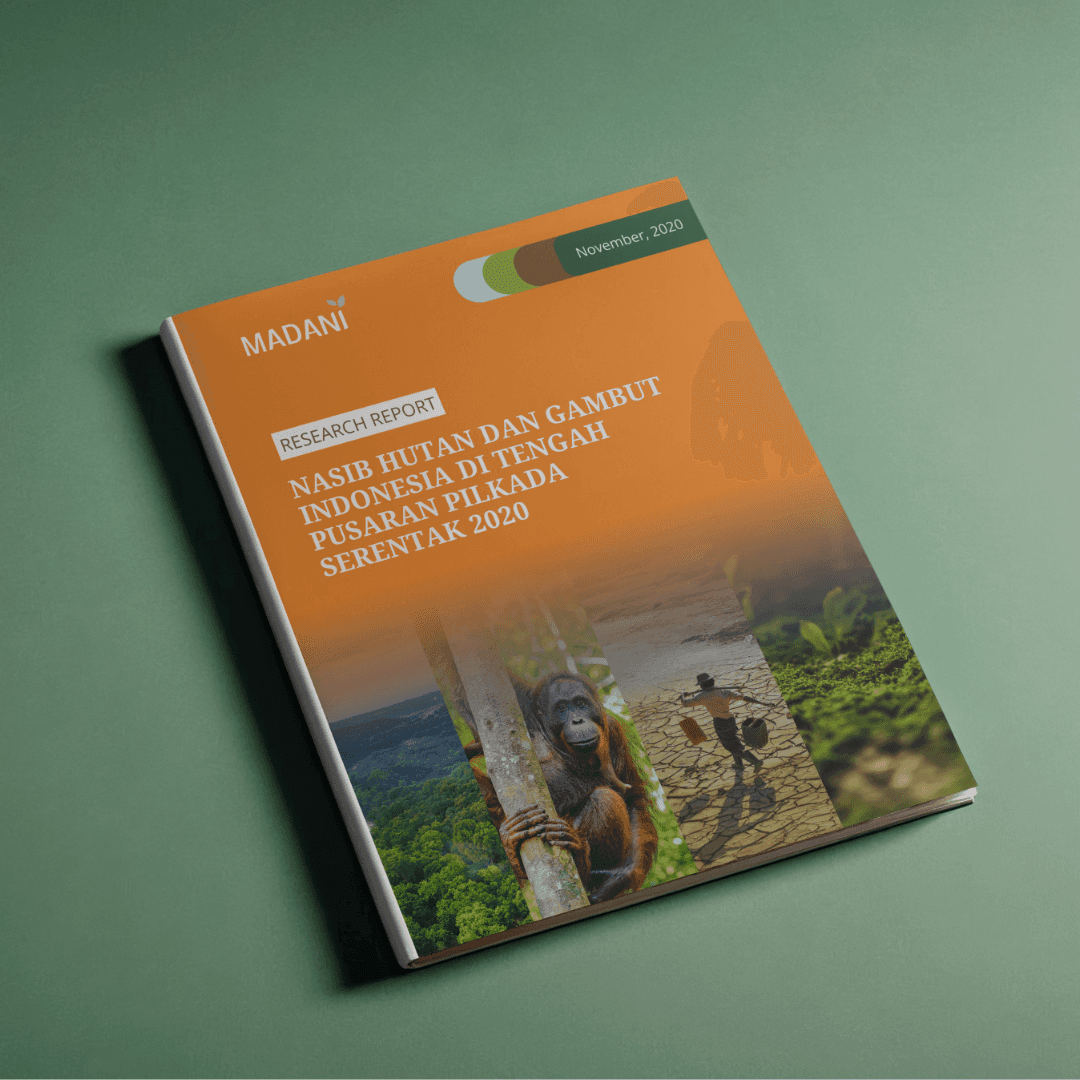
The Fate of Indonesia's Forests and Peatlands Amidst the 2020 Simultaneous Regional Elections
The 2020 Simultaneous Regional Head Elections (Pilkada) held in 9 provinces, 224 regencies, and 37 municipalities constituted a significant political moment with the potential to influence forest protection and the achievement of Indonesia’s climate commitments in the forestry sector. This is particularly relevant given that deforestation and forest and land fires (karhutla) often increase before, during, and after regional elections.
The regions participating in the 2020 Pilkada encompass substantial areas of natural forest, totaling 60.05 million hectares (67.72% of Indonesia’s total natural forest area in 2019), as well as 13.89 million hectares of peatland ecosystems (64.23% of Indonesia’s total peat ecosystem functions in 2019). To transform this natural wealth into an asset (opportunity) rather than a liability (risk) for regional economic development and climate commitments, strong regional leadership is required—leadership that prioritizes environmental protection and sustainable management, particularly of natural forests and peat ecosystems. Effective protection and management can create opportunities for Regional Governments to access various innovative environmental financing mechanisms and incentive schemes, such as intergovernmental fiscal transfers and village funds, REDD+ grants, green finance and investment schemes, carbon economic value instruments, and environmental compensation or payment for ecosystem services.
Although Law No. 11 of 2020 on Job Creation (the Job Creation Law) reduced certain authorities of Regional Governments, Provincial and Regency/Municipal Governments still retain significant responsibilities and powers in protecting and managing forests, peat ecosystems, and the environment. The most significant authorities of Provincial Governments include proposing changes to forest area status and functions; protecting and managing natural forests within Other Land Use Areas (APL) through the Provincial Spatial Plan (RTRW); issuing non-forestry business licenses; managing Forest Management Units (KPH); and accelerating the recognition of Indigenous Peoples. Meanwhile, Regency/Municipal Governments hold key authorities, including proposing changes to forest area status to the Governor; protecting and managing natural forests in APL areas through Regency Spatial Plans (RTRW) and Detailed Spatial Plans (RDTR); issuing non-forestry business licenses; and accelerating the recognition of Indigenous Peoples.
Strategic measures that can be undertaken by newly elected Regional Governments include strengthening regional development planning and budgeting based on principles of economic growth that do not degrade the environment; reinforcing strategies for forest and peat ecosystem protection; and positioning the public and Indigenous Peoples as primary partners in development.