[Belém, 15 November 2025] Climate finance from developed countries must be directly felt by Indigenous Peoples. A shift is needed away from complex, bureaucratic, project-based funding systems toward direct financing that is trust-based and grounded in rights.
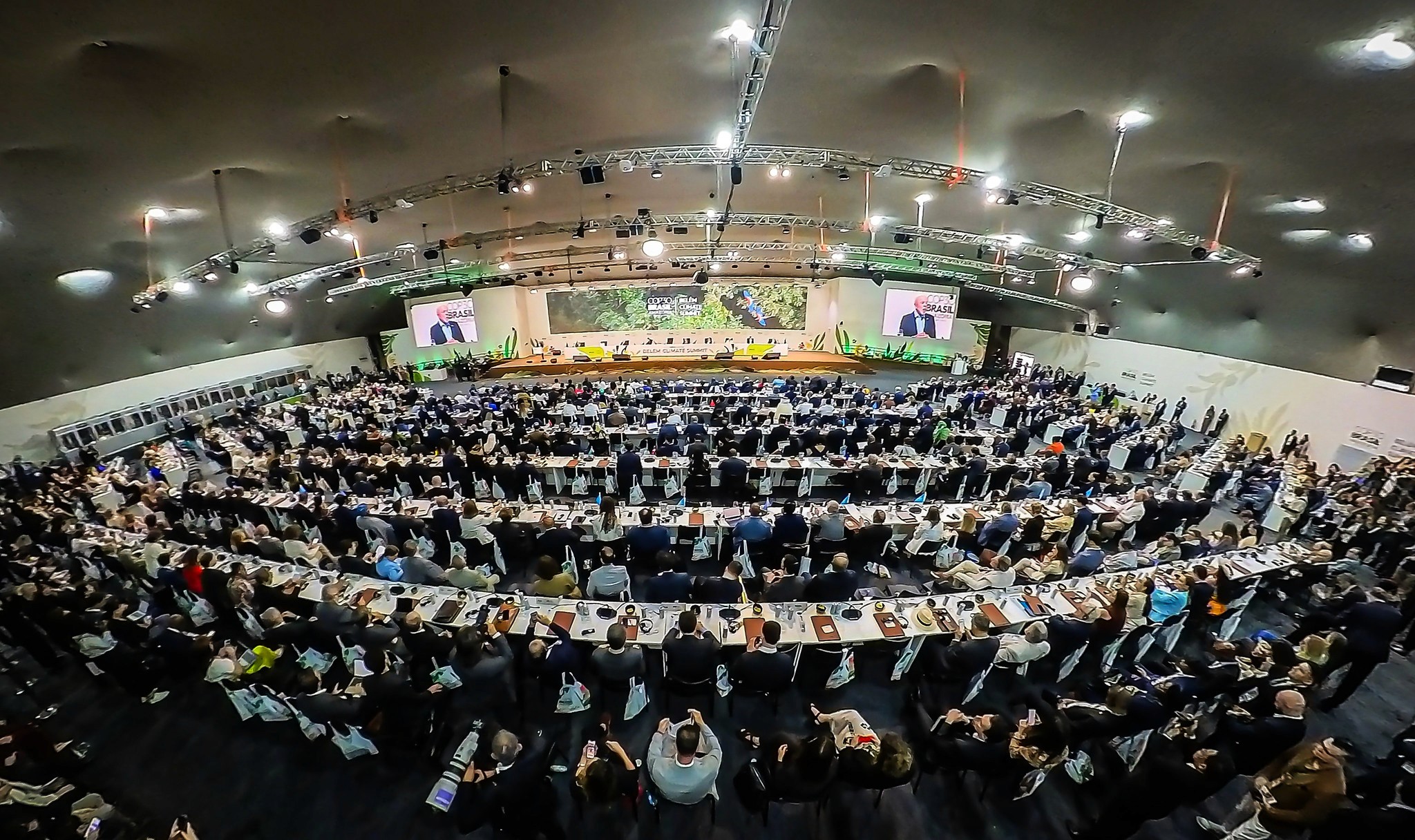
This issue emerged during the discussion “Bridging the Climate Finance Gap: Make the Global North Deliver,” held on the sidelines of the 30th UN Climate Change Conference (COP30-UNFCCC) in Belém, Brazil, on Thursday, 13 November 2025. Speakers included Executive Director of MADANI Berkelanjutan Nadia Hadad; Climate Finance, Trade and Law Expert at the Global Law Thinkers Society (GLTS) Raoman Smita; Sawit Watch researcher Hadi Saputra; Knowledge Manager of Working Group ICCAs Indonesia (WGII) Lasti Fardilla Noor; Executive President of Rural Reconstruction Nepal Dr. Arjun Kumar K.; Coordinator of the Asian People’s Movement on Debt and Development Lidy Nacpil; and Director of Legal Affairs, NDC and Partnership Balance, Oliver Rieche.
Lasti stated that current climate finance mechanisms are overly complex, lengthy, and centralized, making it difficult for Indigenous Peoples and local communities to directly access the support they deserve. Yet Indigenous and local communities are both the most affected groups and the frontline actors in responding to climate change.
She observed a significant gap in ongoing climate finance negotiations at COP30-UNFCCC. “While climate finance is a central topic—so much so that in the Global Goal on Adaptation negotiations developing countries are demanding that funding be tripled—there is still no serious discussion about direct access for Indigenous Peoples and local communities,” said Lasti Fardilla Noor.
According to Lasti, large funding figures mean little if Indigenous Peoples and local communities cannot access and benefit from them. She therefore urged a shift toward climate finance mechanisms that are more inclusive, just, and respectful of community rights.
She cited the Dana Nusantara climate fund initiative, established by the Indigenous Peoples Alliance of the Archipelago (AMAN), WALHI (Friends of the Earth Indonesia), and the Agrarian Reform Consortium (KPA). The Dana Nusantara mechanism is intentionally designed to be simple to facilitate access while maintaining accountability standards. Beneficiaries are not treated as program objects, but as subjects who design and implement their own initiatives in response to their specific needs and contexts. In this way, climate finance can deliver direct benefits at the grassroots level.
Dr. Arjun Kumar advocated for direct, grant-based climate finance for developing countries. According to him, climate finance structured as debt would further burden developing nations. “Climate finance must not create new debt. Public, grant-based funding is essential, because private finance is profit-oriented and often fails to prioritize communities’ needs for adaptation, loss, and damage,” he said.
MADANI Berkelanjutan Executive Director Nadia Hadad emphasized that climate finance from developed countries is a consequence of their historical emissions and appropriation of the global carbon budget. “Climate finance is not charity—it is an obligation,” she said.
Nadia pointed out that the previous target of USD 100 billion per year was never fully met. The new New Collective Quantified Goal (NCQG) sets a minimum commitment of USD 300 billion per year by 2035, alongside a global effort to mobilize up to USD 1.3 trillion. She urged Indonesia, as a member of the G20 and BRICS, to actively push for fulfillment of global climate finance commitments, rather than relying solely on bilateral channels.
“Indonesia should also advocate for developed countries to meet these commitments to finance mitigation and adaptation actions—not only for the Global South, but for the sake of the world,” Nadia said.
At COP29 in Baku, Azerbaijan, the agreed climate finance figures were widely considered insufficient. Earlier this month, the COP Presidencies of Azerbaijan and Brazil released the Baku–Belém Roadmap outlining pathways to reach the USD 1.3 trillion climate finance target by 2035.
Last week, the Independent High-Level Expert Group on Climate Finance—which has supported negotiations since 2021—released its fourth report, focusing on pathways to operationalize the roadmap. Funding is expected to come from a mix of domestic resources, public finance (multilateral, bilateral, and concessional sources), and private finance.
These funds are needed for clean energy transitions; adaptation and resilience measures; loss and damage; conservation of forests, oceans, and biodiversity; and ensuring a just transition away from fossil fuels in developing countries. Achieving this scale of financing will require collective commitment and action from governments, multilateral development banks, and private sector actors.
However, wealthy nations have repeatedly failed to uphold their responsibilities despite being the primary contributors to global warming emissions. Shifting reliance toward uncertain private funds or loans risks exposing low-income countries to further economic vulnerability and debt, rather than delivering the climate justice they deserve.