Dokumen Indonesia :
Author












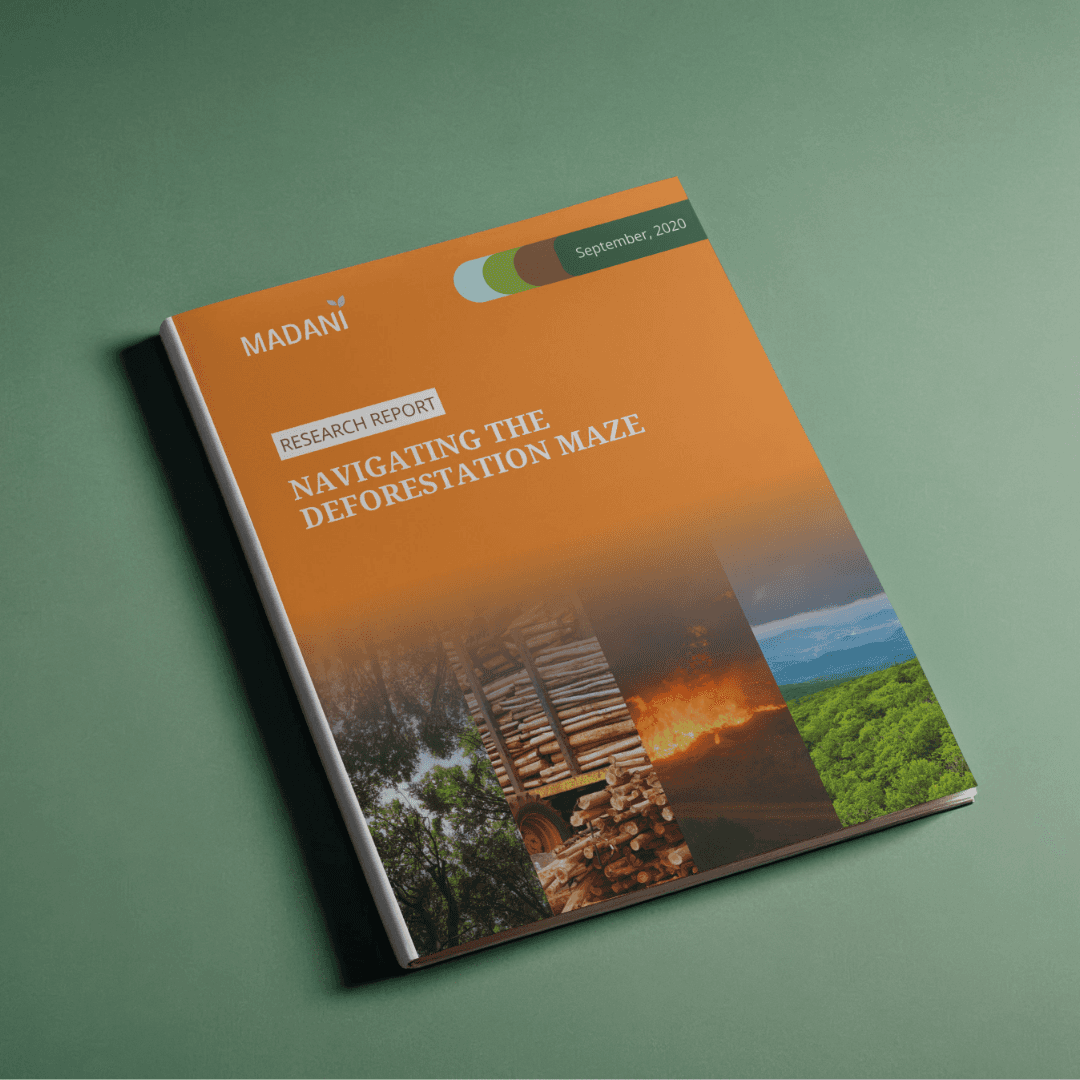
Navigating The Deforestation Maze
This document compares various definitions and figures related to forests, deforestation, and forest degradation from several institutions, namely the Food and Agriculture Organization (FAO), the Ministry of Environment and Forestry (MoEF), and several Civil Society Organizations (CSOs) in Indonesia. The primary differences in defining forests lie in the minimum canopy cover threshold, which ranges from 10% (FAO and Greenpeace) to 30% (MoEF), as well as in the classification of timber plantations as forests. CSOs argue that timber plantations should not be classified as forests because they are monocultures, and they express concern that including them may obscure the conversion of natural forests.
In addition, CSOs oppose the government’s use of the term “net deforestation,” asserting that the loss of natural forests cannot be offset by replanting activities. They argue that such terminology may conceal the degradation of natural forests that are converted into timber plantations.
Regarding deforestation figures, there are significant discrepancies among institutions. The MoEF’s data on natural forest loss for the 2006–2018 period are lower than those published by Forest Watch Indonesia (FWI). MoEF data indicate a declining trend in gross deforestation and natural forest loss, whereas FWI reports an increasing trend in the rate of natural forest loss over the same period. Data on primary forest loss from Global Forest Watch (GFW) are closer to MoEF’s figures on natural forest loss, and both show a downward trend. Cumulatively, from 2006 to 2018, MoEF recorded 7.4 million hectares of natural forest loss, GFW reported 7.3 million hectares, while FWI’s estimate was significantly higher at 15.8 million hectares.
The document recommends that institutions with differing datasets engage in dialogue and publish their methodologies and data sources in order to provide clearer and more transparent information to the public regarding the status of Indonesia’s forests.