Dokumen Indonesia :
Author


















Hutan Harapan's Covid-19 Response and the Carbon Economic Value Regulation
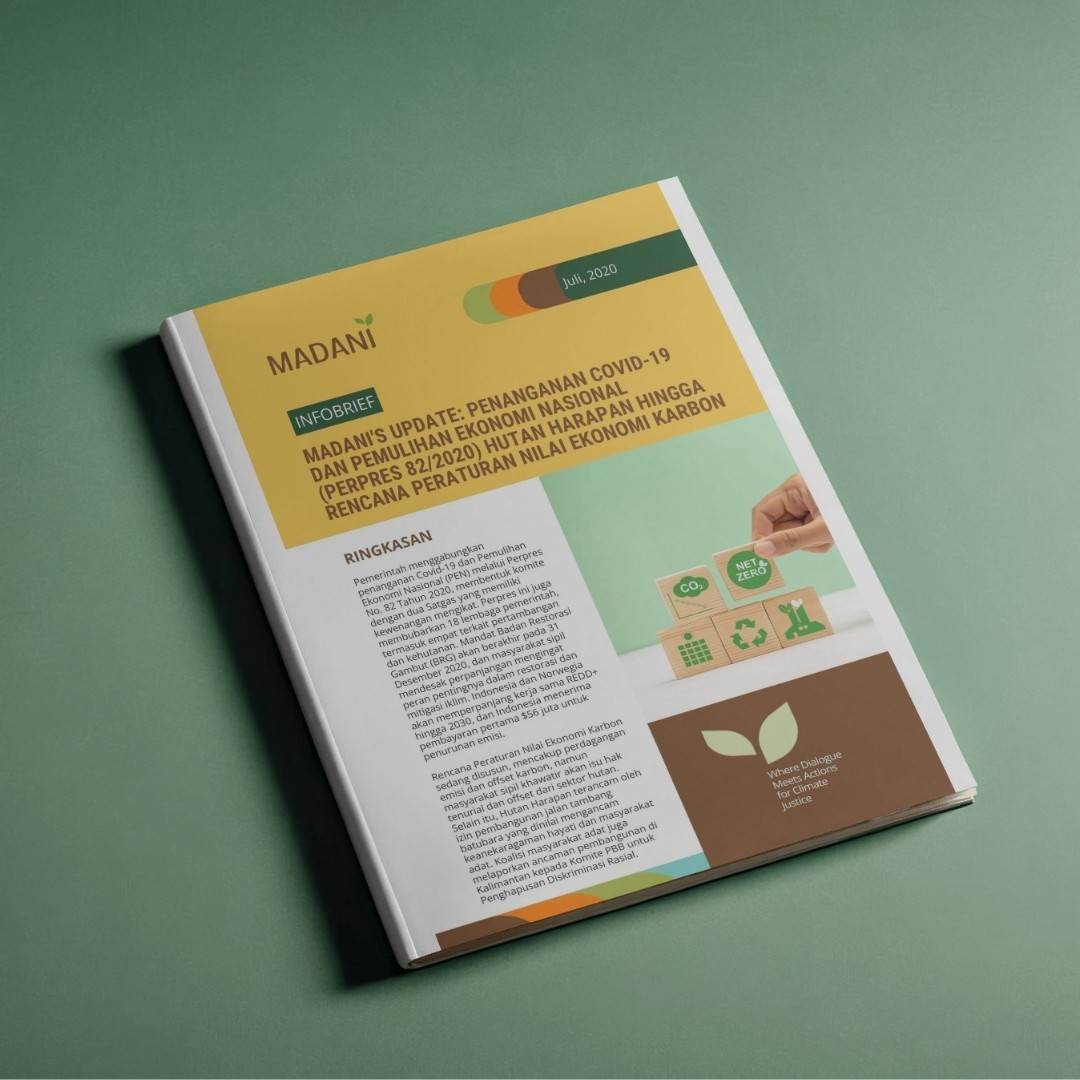
This document outlines policy developments related to forest, peatland, palm oil, and climate change issues in Indonesia as of July 2020. It highlights the establishment of the Committee for COVID-19 Handling and National Economic Recovery (PEN) through Presidential Regulation (Perpres) No. 82 of 2020, which also dissolved 18 government bodies, including four institutions related to mining and forestry. The PEN program was allocated a budget of IDR 607.65 trillion, with the largest portions directed toward social protection and support for micro, small, and medium enterprises (MSMEs).
The document also discusses the future of the Peatland Restoration Agency (BRG), whose mandate was set to expire in December 2020. Civil society organizations urged the government to maintain the agency, given its critical role in peatland restoration, although restoration achievements within concession areas remain significantly below target. Another key development is the continuation of Indonesia–Norway cooperation on REDD+ through 2030, which includes the first results-based payment of USD 56 million for Indonesia’s verified emission reductions.
In addition, the document highlights the planned regulation on Carbon Economic Value (Nilai Ekonomi Karbon/NEK), targeted for completion in August 2020. The regulation is expected to govern emissions trading mechanisms, carbon offsets, and results-based payments. However, civil society has raised concerns regarding community rights, including land tenure security and the need for specific social and environmental safeguards, particularly the application of Free, Prior, and Informed Consent (FPIC).
The document also raises concerns over threats to Harapan Forest in Jambi and South Sumatra, where the Minister of Environment and Forestry issued a permit for the construction of a coal mining road that is considered to endanger biodiversity and Indigenous communities. There are also indications of regulatory capture linked to revisions of ministerial regulations.
Finally, a coalition of Indigenous Peoples reported threats faced by Dayak communities in Kalimantan to the United Nations Committee on the Elimination of Racial Discrimination (UN-CERD), citing the impacts of road construction, oil palm plantations, mining activities, and the large-scale KBOP project. The coalition urged the government to recognize and protect Indigenous Peoples’ rights, including the implementation of FPIC.