Here’s a natural, fluent English translation (not stiff, magazine-style tone preserved):
Feeling hopeless about your own future and constantly comparing your achievements with others might not be unfamiliar—especially if you’re in your mid- to late-20s. People often call this phase a quarter-life crisis, something many young adults experience as they transition into adulthood.
But have you ever felt anxious and hopeless when you see the world around you filling up with trash, forests disappearing, pollution everywhere, people going hungry—so much so that you start thinking the apocalypse is near because the Earth is no longer livable?
If you have, you’re not alone.
A study published in Sustainable Earth Reviews in March 2024 revealed that more than 80 percent of Gen Z care deeply about environmental issues, especially climate change, and experience anxiety because of it. This anxiety emerges when we witness the real impacts of climate change but feel powerless to stop them.
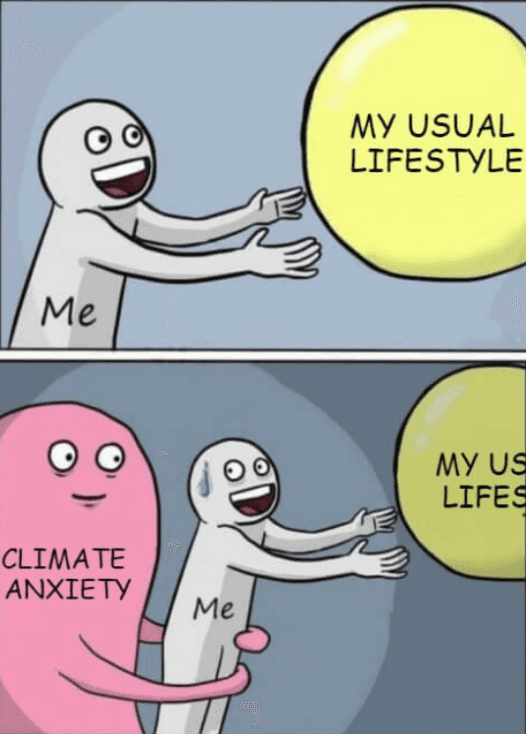
As a generation that’s highly aware of mental health issues, imagine what it’s like to be Gen Z—exposed almost daily to climate crisis content on social media, while feeling anxious and unsure about what can actually be done to fix it.
Oof… it really does sound like a netizen comment, doesn’t it?
Instead of Indonesia Emas (Golden Indonesia), we’re heading toward Indonesia Cemas (Anxious Indonesia) 😰
Source: globalchangeecology.com
Eco-Anxiety: Fear Growing Alongside the Climate Crisis
When people hear the term climate crisis, they might immediately picture melting ice in the Arctic, burning forests, or devastating storms destroying homes. But as we’ve discussed before, the climate crisis also carries hidden dangers that—if left unchecked—can be fatal for both the environment and humanity’s future.
One of the less visible impacts of the climate crisis is eco-anxiety, a form of chronic fear or anxiety related to climate change and environmental degradation. The term was first introduced by the American Psychological Association (APA), Climate for Health, and ecoAmerica to describe the psychological effects of environmental issues.
Although eco-anxiety is not classified as a clinical mental disorder, it has become a widespread phenomenon—especially among young people who feel their future is under threat from the climate crisis.
Source: medium.com
Eco-anxiety isn’t just a fleeting feeling. It’s a deep sense of worry rooted in uncertainty about the planet’s fate. People who experience it often feel powerless to stop environmental destruction, even after trying to do their part—like reducing plastic use, choosing eco-friendly transportation, or participating in climate actions.
This phenomenon can appear in many forms, with common symptoms including:
Persistent anxiety about climate change
Difficulty sleeping due to thoughts about Earth’s future
Feelings of hopelessness, helplessness, or anger toward parties seen as indifferent to environmental issues
Avoiding environmental discussions or news because it feels overwhelming
In extreme cases, eco-anxiety can trigger depression or post-traumatic stress disorder (PTSD)
Why Does Eco-Anxiety Happen?
One major reason is information overload. In a single day, we might consume countless pieces of climate-related news—and most of it is bad. If you’re active on social media, you’re probably constantly exposed to posts about pollution, forest fires, natural disasters, and other climate impacts.
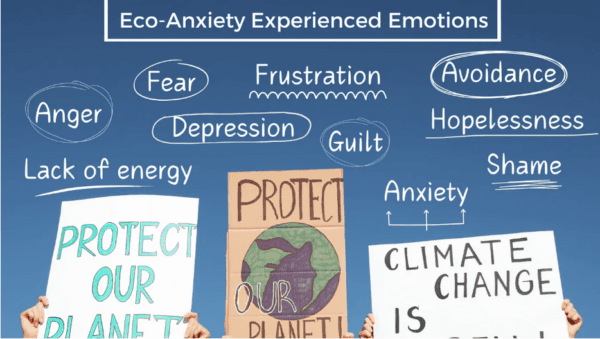
This flood of fast-moving information can be difficult to process. Instead of generating solutions, it often triggers emotional responses such as anger, fear, frustration, despair, avoidance, anxiety, depression, guilt, or even shame—leading to insomnia, loss of appetite, and difficulty concentrating.
Another factor is helplessness. You might feel like you’ve done your part—carrying a tumbler everywhere, using reusable shopping bags, sorting waste at home. But when faced with environmental destruction on a massive scale, those efforts can feel meaningless. Like pouring a bucket of water into the ocean 🥺
Personal experience also plays a role. People who have directly witnessed or been affected by climate-related disasters often feel a deeper emotional connection to nature. For them, environmental damage isn’t just a global issue—it’s deeply personal.
Is There Still Hope?
Erin Seaton, a senior lecturer at Tufts University in the United States who focuses on mental health education, explains that eco-anxiety among young people can be debilitating and worsen existing mental health conditions if left unaddressed.
That’s why Seaton and her team aim to transform climate anxiety into concrete action. The goal is not just to understand the impacts of climate change, but also to identify practical steps we can take together to address it.
Validate and Regulate Emotions
Before taking action, it’s crucial to acknowledge and validate what we’re feeling—including eco-anxiety. Recognizing our emotional state can make it easier to move forward. Ann Ward, an education specialist at Tufts University, studies how young activists in Boston—such as members of the Sunrise Movement, a youth-led organization pushing for real climate action—manage their emotions around climate issues.
Manage Information Intake
Climate news is important, but that doesn’t mean you have to absorb everything. Limit your news consumption or seek sources that highlight solutions and innovations, not just problems. Processing information effectively helps us distinguish what we can act on and what needs broader collaboration.
Build Communication and Connection
Beyond validating negative emotions, it’s important to talk about them openly. Sharing concerns with others who feel the same way can provide support, strengthen connections, and eventually lead to collective action.
Celebrate Small Wins
Celebrating every action you take is not excessive. Even if you can only take one small step to support the Earth, that’s still worth celebrating. Acknowledge your efforts—they can fuel motivation to go even further. Let’s take care of the planet together ❤️
References:
Acaroglu, L. (2024). Part 1: The Rising Peak of Climate and Eco-Anxiety. Diakses dari https://medium.com/disruptive-design/the-rising-peak-of-climate-and-eco-anxiety-b2f9d6ac9045 pada 23 Desember 2024, pukul 15.49 WIB.
American Psychological Association, Climate for Health, & ecoAmerica. (2017). Mental Health and Our Changing Climate: Impacts, Implications, and Guidance. Diakses dari https://www.apa.org/news/press/releases/2017/03/mental-health-climate.pdf
Arif, A. (2024). Mengubah Kecemasan Gen Z Menjadi Aksi Iklim. Diakses dari https://www.kompas.id/baca/humaniora/2024/06/30/mengubah-kecemasan-gen-z-menjadi-aksi-iklim pada 23 Desember 2024, pukul 11.51 WIB.
Mujianto, M. (2024). Eco-Anxiety: Coping with Anxiety Related to Climate Change. Diakses dari https://relungindonesia.org/en/2024/05/eco-anxiety-coping-with-anxiety-related-to-climate-change/ pada 23 Desember 2024, pukul 13.00 WIB.