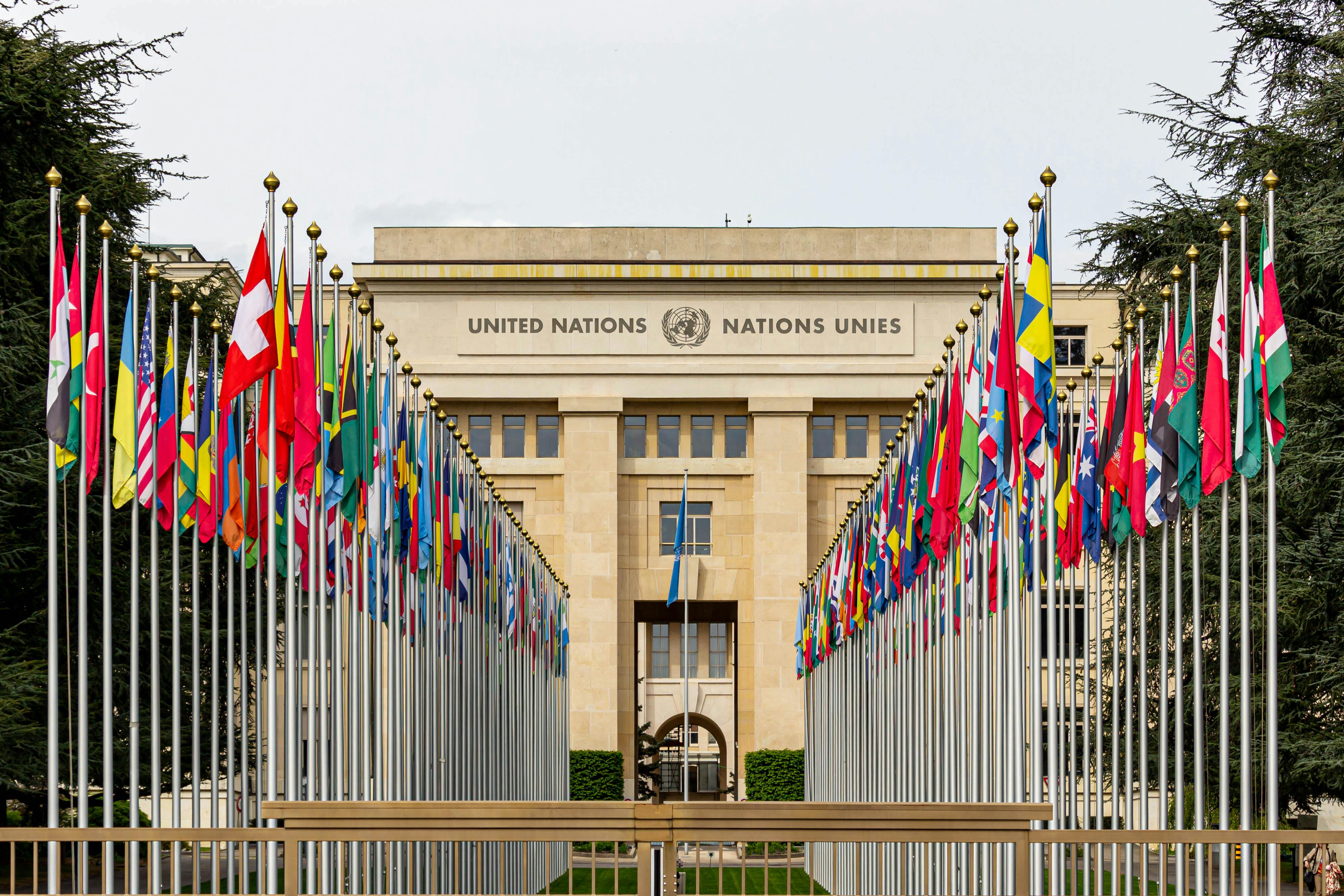
President Prabowo Subianto’s speech at the United Nations General Assembly (UNGA) on September 23, 2025, marked Indonesia’s return to the global diplomatic stage on climate and sustainable development. The President highlighted record national rice production and positioned Indonesia as a future “granary of the world,” while pledging reforestation, renewable energy expansion, and a net-zero carbon target by 2060 or sooner.
Yet ambitious rhetoric delivered in New York will ring hollow if it is not aligned with domestic policies. The climate crisis is fundamentally a crisis of inequality—inequality in access to land, energy, and power. Statements in global forums only carry meaning if followed by concrete steps to protect forests, reform agrarian systems, and ensure a just transition for ordinary people.
A Missed Global Moment
As the country with the world’s third-largest tropical forest, Indonesia holds significant geopolitical importance in addressing the global climate crisis. In this context, Indonesia’s position is comparable to Brazil, home to the largest tropical forest in the world. Brazilian President Luiz Inácio Lula da Silva, who delivered the opening speech, firmly demanded accountability from developed nations for environmental destruction and called for global climate justice.
Unfortunately, President Prabowo’s speech did not address this crucial issue. As a fellow BRICS member and steward of vast tropical ecosystems, Indonesia possesses the moral legitimacy to raise the call for climate justice.
It would have been even more powerful had Prabowo—speaking immediately after U.S. President Donald Trump—used the opportunity to directly counter Trump’s views on climate change and align with Lula’s position. In his nearly hour-long speech, Trump described “climate change as the greatest con job” and mocked the energy transition. Prabowo could have responded when he passionately declared, “Not one country can bully the whole community of the human family.” The context of injustice and oppression could have been directly connected to climate justice, strengthening Indonesia’s stance alongside Global South nations challenging Northern hegemony.
Between Promises, Forests, and Food
On the domestic front, reforestation pledges must be assessed alongside recent data. According to a MADANI Berkelanjutan report, Indonesia lost approximately 206,000 hectares of natural forest in 2024—significantly higher than the previous year. Alarmingly, 72% of this deforestation occurred within designated forest areas, and 39,000 hectares were located in areas supposedly protected under a licensing moratorium. Without reforms in forest governance and permit oversight, reforestation risks becoming little more than a narrative patch covering ongoing deforestation.
In the food sector, the “global granary” narrative is certainly a source of national pride. However, behind this ambition lies the need to safeguard ecological and social justice. Large-scale food estate projects promoted in recent years have tended to open land in heavily forested and Indigenous areas. National food security must be built by empowering smallholder farmers, protecting ecosystems, and resolving agrarian conflicts—not by expanding land conversion in the name of self-sufficiency.
Indonesia must first address its domestic agrarian conflicts before speaking of global food security. The energy transition requires courage to develop a roadmap for gradually phasing out coal-fired power plants—not preserving coal through so-called “green” co-firing schemes. Reforestation commitments must be accompanied by concrete steps to halt deforestation, rather than allowing palm oil and mining expansion to continue encroaching into forest areas.
Prabowo’s support for Palestine and oppressed communities worldwide deserves recognition. However, genuine solidarity must also begin with protecting Indigenous rights at home. To date, the Indigenous Peoples Bill (RUU MHA) remains unenacted. Legal recognition of Indigenous rights is a cornerstone of forest protection and climate justice strategies.
The Climate Crisis Is a Crisis of Inequality
Oxfam’s latest report, “Takers, Not Makers” (2025), reveals that the world’s richest 1% now control around 45% of total global wealth, while nearly 3.6 billion people live below the global poverty line. More than 60% of the wealth held by the ultra-rich does not stem from productivity, but from inheritance, monopoly power, and unjust accumulation. In 2024 alone, the wealth of the richest individuals grew three times faster than the previous year, increasing by approximately USD 2 trillion in a single year.
This inequality is not only economic—it is ecological. The lifestyles and investments of the ultra-wealthy drive massive carbon emissions, while countries like Indonesia bear the consequences in the form of floods, water crises, and agricultural disruption. If these root causes remain unaddressed, climate solutions will remain cosmetic and fail to tackle the underlying drivers.
The climate crisis is a symptom of an unequal development model. Addressing climate change without confronting structural inequality—both domestically and globally—is like treating the symptoms without curing the disease.
Toward COP30: Do Not Miss the Moment Again
COP30 in Brazil next year will be another critical stage. Indonesia, as a fellow tropical forest nation and G20 member, should arrive with a firmer, more progressive, and more ambitious stance. It must not miss another opportunity to demonstrate leadership.
One crucial first step is submitting a Second Nationally Determined Contribution (SNDC) that truly aligns with the Paris Agreement and reflects a just transition. This document must demonstrate commitment to protecting vulnerable communities, safeguarding ecosystems, and outlining a clear, measurable roadmap toward clean energy.
Indonesia holds significant assets: rich biodiversity, vast renewable energy potential, a non-aligned diplomatic tradition, and a history of plural coexistence. If consolidated under fair and consistent governance, Indonesia’s potential to serve as a global bridge-builder on food, energy, peace, and climate issues is not a hollow dream.
But all of this must begin with one simple principle: consistency between what we say in global forums and what we practice at home.
Opinion by Nadia Hadad, Executive Director of MADANI Berkelanjutan.