Amid the swirl of energy transition and the ambition of a national biodiesel mix, Indonesia faces a strategic choice that will shape the future of ecology and social justice. The policy to increase the biofuel (BBN) mix from B40 to B50 and eventually B100 may sound promising from an economic and geopolitical perspective. However, behind that ambition lurks a significant risk: expansion of palm oil plantations by millions of hectares, increasing agrarian conflicts, and threats to food security and forest ecosystems.
An almost absolute dependence on palm oil as the raw material for biodiesel creates a structural dilemma. On one hand, the government aims for energy self-sufficiency. On the other hand, the chosen strategy deepens market inequality, weakens the role of local communities, and accelerates deforestation. In this situation, rationalization is needed by reassessing outdated approaches and opening space for new, fairer, and more sustainable alternatives.
Through this policy brief, Madani Berkelanjutan proposes a new direction: community-based interventions, limiting palm oil expansion through a cap policy, and integrating alternative feedstocks such as used cooking oil, rubber seeds, nyamplung (Calophyllum inophyllum), and jatropha. This approach not only reduces social and ecological costs but also opens up rural economic opportunities worth up to USD 2 billion.
We invite the public, policymakers, and industry players to collectively re-read and reassess Indonesia's energy transition strategy. Rationalizing the energy mix does not mean slowing down progress—it means ensuring that progress does not come at a high cost to the environment and future generations.
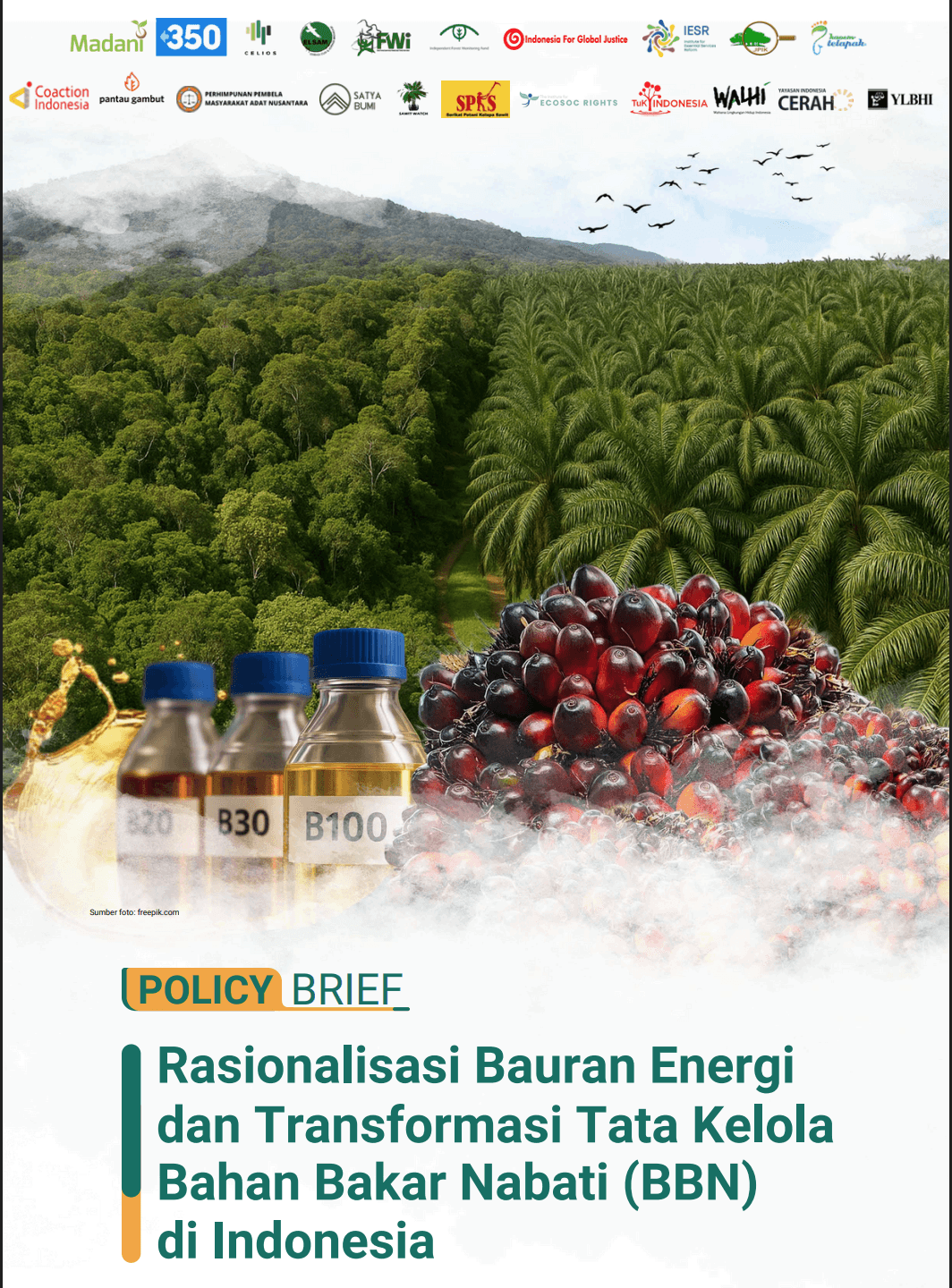
The MADANI Policy Brief – Rationalization of Energy Mix and Governance Transformation of Biofuel (BBN) in Indonesia can be downloaded here.